
A Failure to Launch
Play A Failure to Launch
A Failure to Launch Screenshots









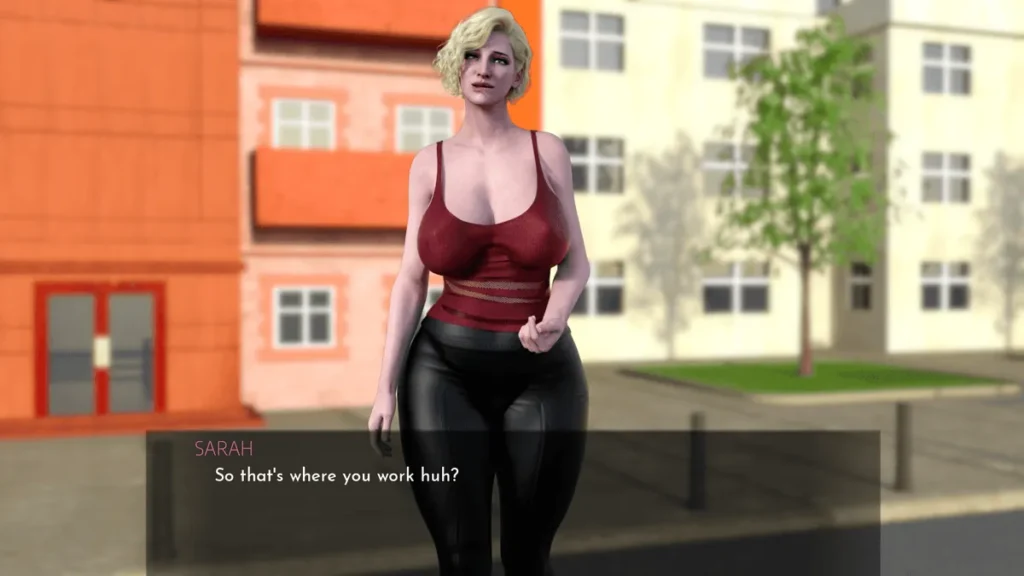
A Failure to Launch review
An In-Depth Look at the Gameplay, Story, and Features of ‘A Failure to Launch’
If you’ve heard about ‘A Failure to Launch’ and want to know what makes this game stand out, you’re in the right place. This article dives deep into the unique aspects of ‘A Failure to Launch,’ exploring its gameplay mechanics, narrative elements, and what players can expect from this intriguing title. Whether you’re curious about the story, the characters, or the interactive features, we’ll cover everything you need to know to decide if this game is for you.
Exploring the Gameplay and Mechanics of ‘A Failure to Launch’
Ever sat on your couch, scrolling through your library, and thought, “I just want something different“? Not another epic fantasy war or a gritty survival sim, but a game that feels… relatable? That was me, until I booted up A Failure to Launch. From the first minute, I realized this wasn’t playing by the usual rules. It trades swords for social anxiety and mana bars for motivation meters. Let’s dive into what makes its A Failure to Launch gameplay so uniquely compelling and deceptively deep. 🎮
### What Makes the Gameplay Unique?
At its heart, A Failure to Launch is a game about inaction as much as action. The core game mechanics brilliantly turn everyday struggles into engaging systems. You don’t have a health bar; you have an Energy & Ambition gauge. You don’t fight monsters; you battle procrastination, awkward conversations, and the siren call of a comfortable sofa.
What truly sets the A Failure to Launch gameplay apart is its “Consequence of Comfort” system. Every choice to avoid a task or indulge in distraction doesn’t just pause your progress—it actively alters your environment and relationships. I learned this the hard way. Early on, I repeatedly chose the “Ignore Phone” option when my in-game friend, Maya, tried to invite me out. It seemed harmless, just putting off socializing for a virtual day of watching TV. A week later in-game, my apartment was messier (a visual penalty), my Energy gauge refilled slower, and Maya had stopped calling entirely, locking me out of a whole storyline about reconnecting with old friends. The game doesn’t just judge you; it reacts to you.
The brilliance is in how it frames player progression. You don’t “level up” in a traditional sense. Instead, you slowly unlock new interactive features and dialogue options by successfully completing small, personal challenges. Finishing a basic chore might unlock the ability to briefly tidy a room, which then opens up the chance to have a visitor without a debilitating anxiety debuff. It’s a profound, granular system where victory isn’t slaying a dragon, but finally doing your laundry. 🐉
Here’s a quick breakdown of the key systems that power this unique experience:
| Core Mechanic | What It Does | Why It’s Unique |
|---|---|---|
| Energy & Ambition Gauge | Dual resource system. Energy depletes with actions; Ambition fuels proactive choices and is hard to replenish. | Forces meaningful trade-offs. Do you use Ambition to apply for a job, or spend Energy on easy tasks? |
| The Momentum Wheel | A visual tracker that fills with consecutive positive actions and empties with avoidance. | Creates a tangible “flow” state. A full wheel grants temporary buffs, making progress feel rewarding and addictive. |
| Contextual Interaction Menu | Dialogue and action choices change based on location, time of day, and character mental state. | Eliminates repetitive menus. Talking to your parent feels and offers different options than talking to a potential love interest. |
| Environmental Degradation/Improvement | Your living space visually reflects your choices, becoming cluttered or clean. | The world is a direct mirror of your gameplay, adding a powerful, silent layer of feedback without any UI pop-ups. |
### Character Interaction and Progression
If the game mechanics are the skeleton, the character interaction is the soul of this experience. This isn’t a game about collecting quests from NPCs with gold exclamation points. Every relationship is a delicate, interactive system of its own. Your player progression is intrinsically tied to how you navigate these bonds.
Characters remember everything. They recall if you cancelled plans, if you offered genuine encouragement, or if you gave a half-hearted, canned response. The dialogue tree is less of a “tree” and more of a sprawling, sensitive web. I had one unforgettable moment that cemented this for me. I was trying to build a rapport with my neighbor, Leo, a seemingly confident musician with his own struggles. After several surface-level chats, I had the option to ask about the song he was practicing. Most games would have a generic “That sounds nice” response. Here, I chose to “Listen Intently – Ask about the melancholic chord progression.”
This single choice, which cost a chunk of my Ambition resource, unlocked a hidden layer. Leo’s posture changed on screen. He opened up about creative doubt, a theme my character was battling in a different way. This led to a unique, unmarked side-story where we occasionally shared quiet moments of mutual support, not with grand gestures, but with a new dialogue option to simply “Share a comfortable silence.” This character interaction didn’t give me a better weapon; it gave my character a genuine, textured friendship that made the virtual world feel real and worth engaging with. It was a breakthrough that felt more significant than any boss fight. ✨
Your progression is measured in soft skills and opened doors:
* Social Confidence: Unlocks new dialogue branches and the ability to initiate plans.
* Personal Accountability: Reduces the drain from chores and increases Momentum gains.
* Self-Awareness: Reveals hidden motivations in other characters and your own, allowing for more profound choices.
This system ensures that your player progression always feels personal and earned. You’re not grinding experience points; you’re building a person.
### Technical Features and User Interface
A game with such nuanced systems needs a user interface that communicates without overwhelming, and A Failure to Launch largely nails it. The game controls are deliberately simple—primarily point-and-click with context-sensitive cursors—which puts the focus squarely on decision-making, not dexterity.
The user interface (UI) is minimalist and diegetic where possible. Your “menu” is often your character’s phone, where texts, emails, and a to-do app live. Your mental state is represented by subtle visual filters and sound design, not a cluster of icons. When your character is anxious, the edges of the screen might subtly blur, and ambient noise becomes muffled. This approach keeps you immersed in the world.
However, the most praised interactive feature is the “Thought Bubble” system. By pressing and holding a button, you can see your character’s immediate, often conflicting, internal thoughts about a situation or person. It’s not a guide to the “correct” choice, but a window into their psyche. Seeing “This is too much effort” battle with “But I said I would…” before choosing an action adds incredible depth. It turns every decision into a miniature role-playing moment.
The game controls for this are seamless. A simple click selects an action, while a hover previews potential Energy/Ambition costs. The radial menu for conversations is clean and groups similar emotional tones together, preventing you from accidentally picking a sarcastic option when you meant to be supportive.
A quick tip from my playthrough: Don’t ignore the game’s accessibility and hint settings. There’s an option to highlight “time-sensitive” interactions in the environment. Turning this on helped me avoid missing key moments early on without ruining the exploration!
While some might find the pace deliberate, every technical choice supports the game’s theme. The interactive features, from the Thought Bubble to the phone-based menus, are all designed to deepen your connection to the character’s inner world, making their small triumphs your own. The clean, unobtrusive user interface ensures that the emotional weight of the A Failure to Launch gameplay is never buried under UI clutter.
In the end, playing A Failure to Launch is a masterclass in how game mechanics can serve a story and theme. It proves that tension can come from an unanswered text message, and progression can feel monumental when it’s simply the courage to leave the house. Its genius lies in making you care deeply about the smallest steps forward, because in this game, and maybe in life, that’s where the real battle is. 🏠💪
In summary, ‘A Failure to Launch’ offers a distinctive gameplay experience characterized by engaging character interactions and thoughtful progression systems. Its technical design supports an intuitive and immersive user interface that enhances player involvement. Whether you’re a newcomer or a seasoned player, this game provides unique challenges and rewarding moments that make it worth exploring. If you’re interested in interactive storytelling combined with strategic gameplay, ‘A Failure to Launch’ is definitely a title to consider.